In shortDub the first ten episodes into one language, publish them on accounts that serve that market, and compare how far viewers watch against the original before you dub the rest. Keep one voice per character for the whole season, check who is speaking before anything is dubbed, lip-sync the dialogue, and burn in subtitles in the new language. Count cost and decisions by the episode, the same unit you sell.
Start from a finished season, not a script
A dubbed version is derived from the finished episode: the picture, the music and the effects stay, and only the dialogue changes. That means the English cut should be final before you dub it. Every later change to the cut (a trimmed scene, a re-rendered shot) leaves the dubbed version out of step, and the episode has to be dubbed again.
If the season was made in Dawnwood, the dub is translated from the episode's script, so every line, speaker and character name is already known. If it was made somewhere else, the episode is transcribed first and the speakers are worked out from the sound. Either way the season you dub is the one viewers already responded to.
Open the language in stages
Do not dub fifty episodes into a language nobody has tested. Dub the first ten, publish them for that market, and let the numbers decide whether the rest is worth it.
The first ten episodes carry the hook and the first paywall in most seasons (see how many episodes and how long), so they are a fair test of whether the story travels. Compare how far viewers in the new language watch against the English episodes on accounts of a similar size. If they hold, dub the rest of the season. If they drop off early, the story may not suit that market, and you have only spent ten episodes finding out.
Keep one voice per character, all season
Viewers notice a voice change long before they notice a translation slip. The single most important rule for a dubbed season is that each character sounds the same in episode 40 as in episode 1.
In practice that means the voices are fixed per character and per language, not per episode. For a series made in Dawnwood, each character has a voice in the new language matched to their original voice, and every episode uses it. For uploaded episodes, the speakers found in each new episode are matched to the ones already in the project, and you confirm the matches before anything is dubbed.
Check who is speaking before you dub
Speaker detection from sound alone can merge two similar voices into one, and then both characters are dubbed in the same voice. Listen to a short sample of each speaker, rename them to the character, and fix any line that is credited to the wrong person. A minute spent here prevents the most expensive mistake in a dub: a whole episode where two characters sound alike.
Lip-sync the dialogue, keep the rest
Vertical drama is shot close: faces fill the frame, and a mouth that keeps moving after the line ends is obvious on a phone. Lip-sync re-times the mouth to the new dialogue shot by shot, including two-person shots where only one face is talking. Translated lines are also fitted to the length of the original, so a line does not run past the cut.
Music and effects come from the original episode, separated from the dialogue before the new voices are mixed back in, and loudness is matched line by line so the dubbed version sits at the same level as the original.
Subtitles in the new language
Most viewers of short drama watch with the sound low or off. Burn subtitles in the new language into the picture, and keep the SRT file for platforms that take a separate caption track. If the source already has subtitles burned in, cover that band before the new ones go on; two sets of subtitles on screen is worse than none.
What to publish where
Publish each language on accounts that serve that market, not on the English account. Write the post caption and the hook line in the new language yourself; the dub covers the episode, not the caption. For licensing and distribution, deliver the dubbed MP4 with its SRT alongside the original master; see whether platforms accept AI-made series for the disclosure side.
Counting cost by the episode
Short-drama seasons are scheduled, sold and paid for by the episode, so count a dub the same way: episodes times languages. That makes the staged approach easy to reason about. Ten episodes into one language is the cost of the test, and the rest of the season is a separate decision you make after the market answers. Current rates are on the dubbing page; the step-by-step help for uploads is in the drama dubbing guide.
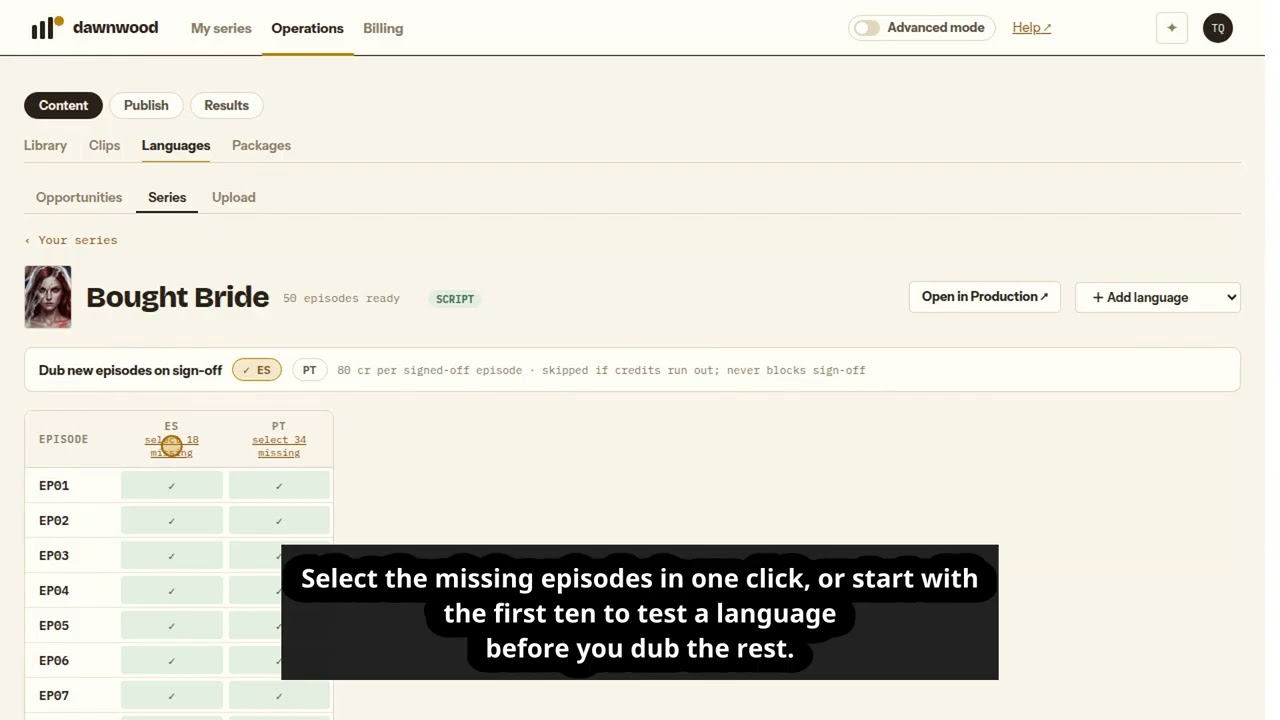
Dub your first ten episodes from Operations → Content → Languages, or upload a finished season
Dawnwood's Auto mode turns a story told in a few lines into a vertical series. It writes the characters, the 10-episode outline and the scripts without spending credits, then films one episode at a time: you read the script and say go. Credits only go on art and filming, and each episode shows its cost before it starts.
Tell us your storyHow Auto mode works →