In shortA vertical drama is a scripted series shot in portrait (9:16) for phones, released as episodes of roughly one to two minutes, usually 50 to 80 of them, each ending on a cliffhanger. "Micro drama", "short drama", "mini drama" and "vertical series" are the same thing under different platform vocabularies. The format grew out of China's duanju market and is now produced in English, Spanish, Portuguese and a dozen other languages for apps, social feeds and studio-owned sites.
The definition
A vertical drama is a serialised, scripted story built for the phone rather than adapted to it. Four properties define the format; a piece that lacks any one of them is something else (a web series, a clip, a trailer).
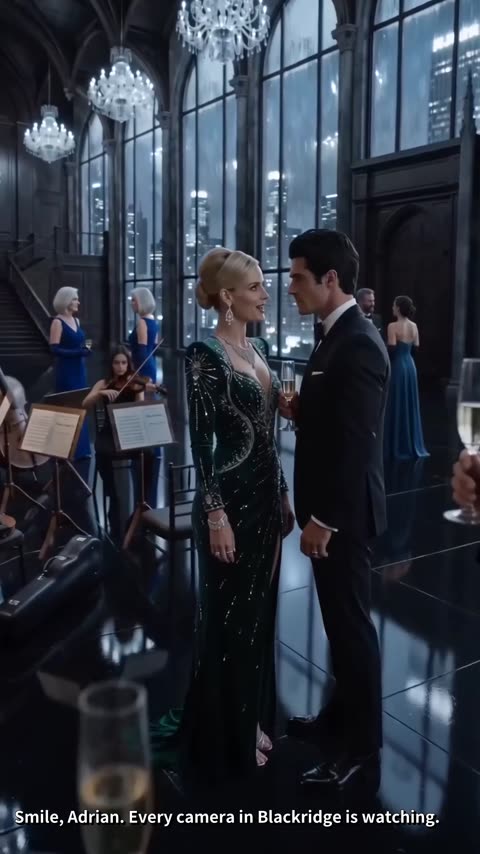
- Portrait frame. Shot and edited in 9:16. Faces fill the frame; two people is a crowd; text and subtitles sit inside the picture.
- Micro episodes. Each episode runs about one to two minutes and is a complete beat: a situation, an escalation, a turn.
- Serial cliffhangers. Every episode ends on a question the next one answers in its first seconds. The season is a chain, not a collection.
- Season scale. A season is typically 50 to 80 episodes, sometimes 100 or more; short seasons of 10 to 15 exist for self-contained stories. See how many episodes.
Total runtime of a season is usually 45 to 100 minutes: a feature film cut into pieces the size of a social video, with a hook on every piece.
The names
Different markets and platforms use different words for the same object.
| Term | Where it is used | Notes |
|---|---|---|
| Vertical drama, vertical series | Industry and trade press, English | Emphasises the frame |
| Short drama | App stores, English-language platforms | Emphasises episode length |
| Micro drama, mini drama | Social feeds, hashtags, Southeast Asia | Interchangeable with short drama |
| Duanju (短剧), micro short drama (微短剧) | China, the format's origin | Regulated as its own category since 2026 |
| Mini series, episodic shorts | Marketing copy | Loose; may include non-serial clips |
The hashtags creators use on social platforms (#shortdrama, #minidrama, #verticaldrama) are the same three words; a series should carry all of them.
Where it came from
The format emerged in China's duanju market, where serialised portrait stories sold by the episode became a mass-market product in the early 2020s. Apps built for export (ReelShort, DramaBox, ShortMax and others) translated and then originated English-language series, and the model spread to Spanish, Portuguese, Italian, German, Hindi and Turkish audiences. By 2026 the format had its own regulatory category in China, including a requirement to disclose AI-generated content episode by episode, and a growing share of new titles were partly or wholly produced with AI pipelines.
How it is distributed
Three channels, often used together for one title.
- Coin and subscription apps. The first several episodes are free; viewers unlock the rest with in-app currency or a subscription. This is where the 50-to-80-episode norm comes from.
- Social feeds. Full episodes posted as Shorts, Reels and TikToks, either the free run as a funnel or the whole season for ad revenue. Duskwire released all 50 episodes of The Alpha's Dead Bride this way.
- Studio-owned sites. A studio streams complete seasons on its own site with a free window and a single season purchase, keeping the audience relationship. The Alpha's Bought Bride streams this way with episodes 1 to 5 free.
How it is written
The writing conventions follow from the frame and the cadence: a cold-open hook in the first five seconds, three escalating blows in the first thirty, one turn per episode at or after the 40 percent mark, a labelled cliffhanger in the last five, dialogue under twelve words, and no more than two locations per episode. The script format guide has a template; the hook and cliffhanger guides cover the two mandatory lines.
Genre-wise the format is dominated by romance and revenge, with werewolf, billionaire, mafia and rebirth settings, and a growing thriller and folk-horror fringe. The seven emotional frames describe the arcs that recur.
How it is made
Traditionally, with a small crew shooting many short scenes in few locations over a few weeks, then editing into episodes. Increasingly, with AI production pipelines that write, storyboard, cast consistent characters and render each episode, with human review at the script and picture stages. The format's constraints (few locations, few characters per frame, short shots, subtitles on) happen to be the constraints AI video handles best, which is why the two arrived together.
What it is not
- Not a web series cut short. A web series episode is a scene; a vertical drama episode is a beat with a turn.
- Not a trailer or a clip. Clips are excerpts of something longer. An episode is complete.
- Not a vlog or a skit. Both are single-shot formats; the vertical drama is serial and scripted.
- Not necessarily low-budget. Traditional productions run to six figures per season; the point of the format is cadence and frame, not cost.
Write your first vertical drama season free, from premise to scripts
On Dawnwood the writing is free: type a premise, get a season bible and every episode script, revise them as much as you like. Credits are only spent when you generate art or render video, and every charge is shown before you confirm.
Start a series freeHow a series gets made →