Short answerName the lead, what they want, what stands in the way and the world's unusual rule, in concrete terms. One hundred characters is the minimum, not the target; three or four dense sentences is the sweet spot.
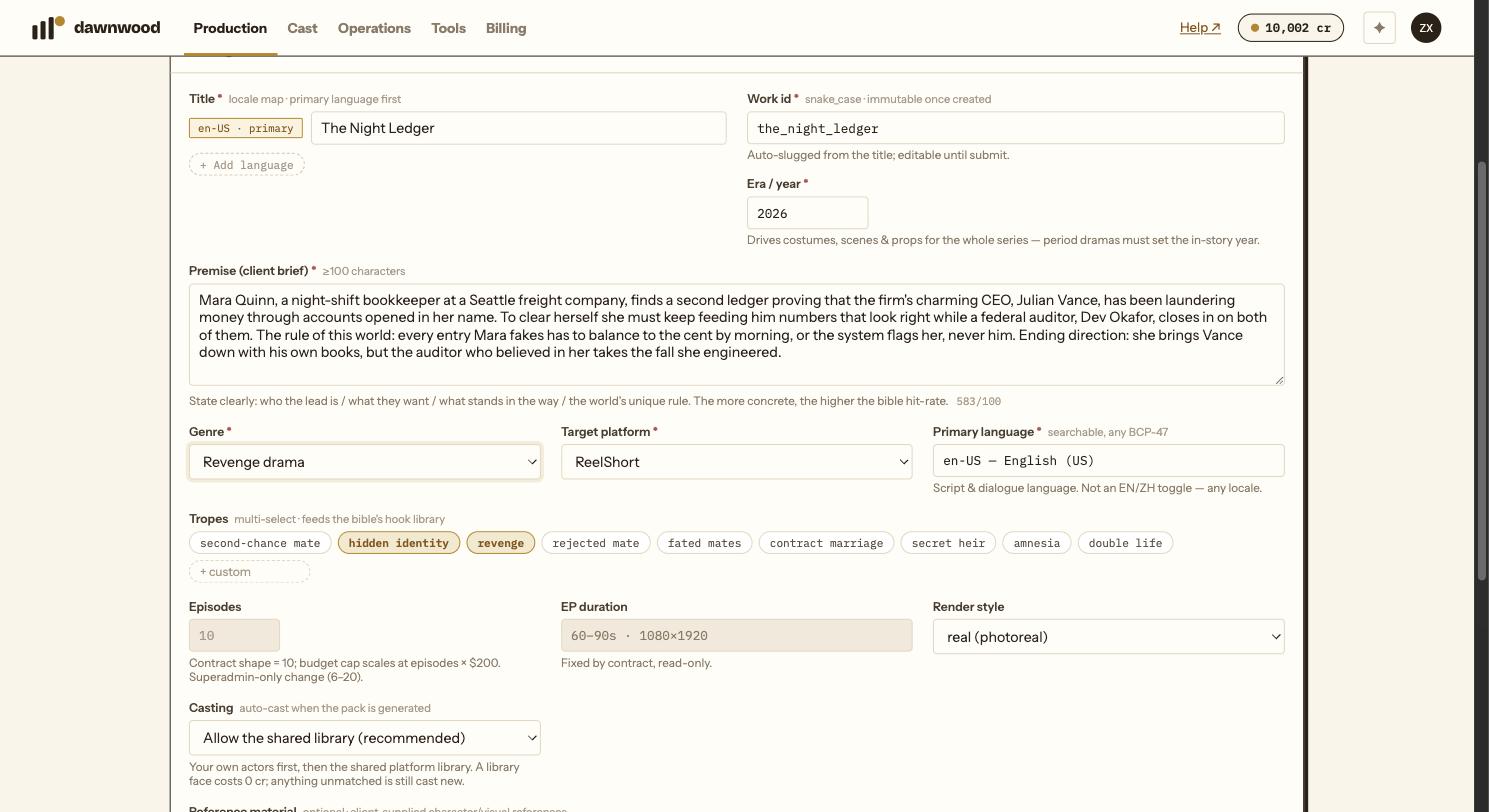
The four things every premise needs
The brief helper says it in one line: state clearly who the lead is, what they want, what stands in the way, and the world's unique rule. The bible writer builds the engine, the ticking clock and the reveal ladder from those four facts. If one is missing, it gets invented, and you may not like the invention.
- The lead, with one defining trait or wound. "A dismissed court clerk who still keeps the imperial ledgers by memory."
- The want, specific and visible. Not "happiness" but "to win back the family house at the county wager."
- The obstacle, ideally a person. A rival, a magistrate, a mate who rejected them.
- The rule of the world. The thing that makes this show different: the contract that cannot be broken, the cricket that can be trained, the mark that appears at midnight.
What helps
- Give the ending direction, not the ending. "She wins, but at the cost of the one person who believed in her" tells the writer where to aim the cliffhangers.
- Name two or three characters. Names in the premise become key roles in the world pack.
- Use the era. A premise set in 1587 should read like 1587. The year field does the heavy lifting for costumes and sets, but the premise sets the manners.
- Tick tropes you actually want. They feed the hook library that drives the first five seconds of every episode.
What hurts
- Lists of features ("action, romance, twists") give the writer nothing to build with.
- Ten characters in the premise. Every named character becomes a card, an anchor and a voice. Keep the first run to a handful.
- Contradicting the year, for example a smartphone in a Ming-dynasty premise. The renderer will follow the year; the script will follow the premise; the result drifts.
The three examples
While the premise box is empty you can click Try: Billionaire revenge, Try: Werewolf mate contract or Try: Small-town folk horror to load a working premise and see the shape.
After you submit
The premise is immutable, but the bible is not. Everything you want to change about the story is fixed with feedback on the bible step, see feedback vs. editing the bible.
Still stuck? Email support@dawnwood.ai with your account email, the series, the episode and the segment or group — see what to include.