In shortMafia romance in vertical format runs on one promise: the most dangerous man in the city is dangerous to everyone except her. The cast is fixed (the don or heir, the woman pulled into his world, the family that wants her gone, the rival family, and a betrayer inside the house), and most seasons use one of five formulas: the alliance marriage, the debt, protective custody, the rival family's daughter, and the woman who came to bring him down. The violence stays mostly off screen. What viewers watch for is who he protects and what that costs him.
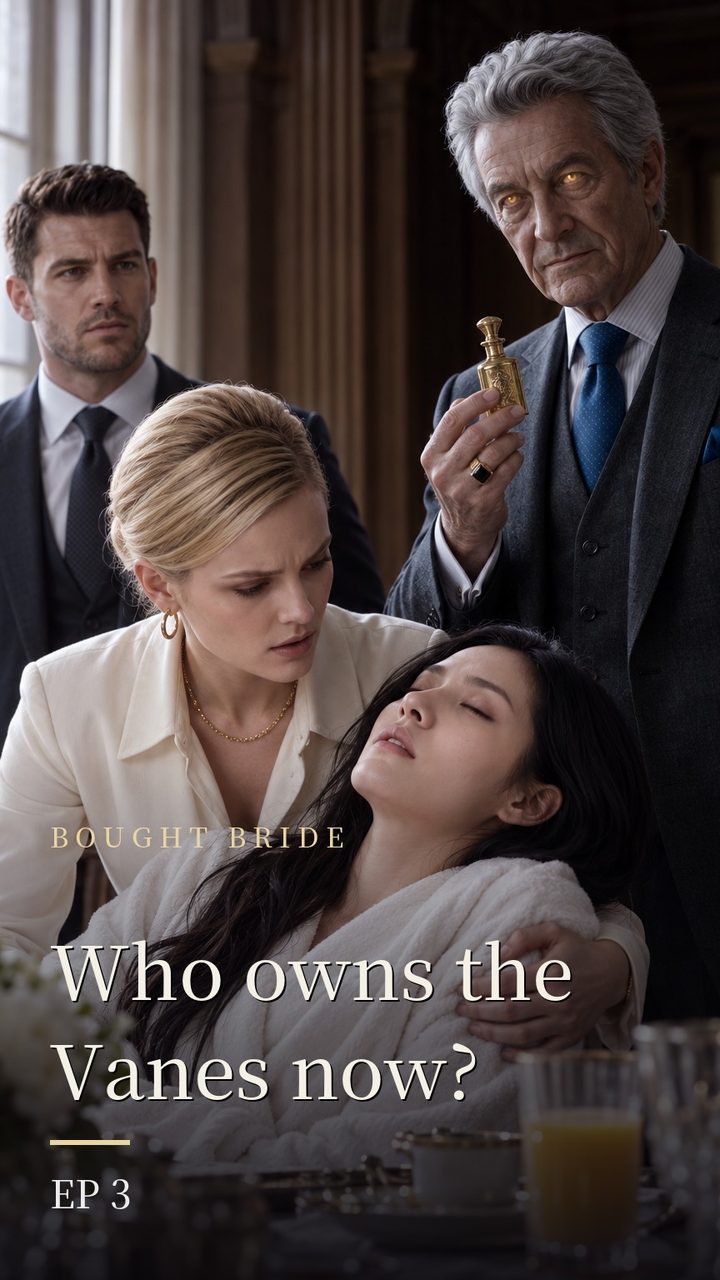
Why the genre fits the format
Mafia romance is billionaire romance with the safety off. The power gap is still there, but now it's about who can hurt whom, not who can buy whom. Every episode can end on a threat, so it is the easiest genre to cliffhang. A 60–90 second episode has room for one threat and one protective move, and that pair is the genre's basic unit.
The emotional frame is forbidden love (she should not want him, and his world is the reason), with a revenge line running through the family. The love line carries the middle of the season; the betrayals own the act endings.
The cast web
Five roles. The city, the family name and the business are yours to choose; what each role does in the story is fixed.
The don (or the heir). He runs the family or is about to. You show how feared he is through other people: men who stop talking when he walks in, a problem that disappears after one phone call. He has a code (no women, no children, he keeps his word), and the plot will test it. He is cold to her at the start because caring about someone is a weakness his enemies can use.
The heroine. An outsider to his world: a doctor, an accountant, a witness, a daughter traded to settle a debt. She is never just a prize. She notices things, says no, and has a skill the family ends up needing. Her arc goes from being kept to choosing to stay, and the season ends with her holding power inside the family, not just being protected by it.
The family. His father, mother, uncles or consigliere, who see her as a liability. One elder (often the grandmother) sees in her what the family has lost and quietly takes her side.
The rival family. The outside threat that drives the plot: territory, an old killing, a broken alliance. They target her because she is the one thing he is visibly afraid to lose.
The betrayer. Someone inside the house (his brother, his right hand, the woman who expected to marry him) who sells information to the rivals. Hiding who it is gives you the season's second mystery. They are exposed in front of the whole family, with proof.
The five formulas
The skeleton is the same in all five: she is pulled into his world in episode 1, she becomes his weakness in the middle, and in the finale she ends up holding power in it.
- The alliance marriage. Two families seal a truce with a wedding; she is the price. Separate rooms and an agreed end date, until an attack at the wedding forces him to choose her over the alliance. The finale reverses it: the truce holds because of her, not because of the marriage.
- The debt. Her father or brother owes the family money or a life. She walks in to pay it herself. He expected to collect; instead he finds the only person in the city who isn't afraid of him. The debt is paid off, in public, by the man who held it.
- Protective custody. She witnessed something she shouldn't have, and the safest place for her is his house. Every rule he sets is for her safety, and every rule breaks. Choose this formula when you want a lot of scenes in one location: it keeps the cast small and the sets cheap.
- The rival family's daughter. Their families have been at war for a generation. They meet without knowing who the other is. When they find out, which happens on screen in front of both families, this becomes the most forbidden-love version. The finale ends the war, or ends with one of them choosing the other's side.
- The undercover heroine. She came into his house to bring him down, as a police officer, a journalist, or a daughter avenging her father. She falls for him before she can do it. The middle reveal is hers, not his, so this formula suits seasons that want the heroine in control of the plot.
Formulas 1 and 3 lead with the love story. Formulas 4 and 5 lead with reveals and set up a betrayal finale. Formula 2 is the fastest to set up in episode 1.
The three-stage rhythm
- Open (first 3 seconds of episode 1): threat and outsider in one image. A gun on the table at her father's restaurant, a wedding dress and a body bag in the same hallway, or the moment she sees something she wasn't supposed to see. See the first-thirty-seconds hook.
- Middle: proximity under threat. His house, his rules, his men at her door. He protects her before he admits anything; she refuses protection she didn't ask for, and is sometimes right to. Each episode moves the couple one step closer and adds one outside threat (the rival family, the betrayer, the past).
- Close (every episode): a threat or a choice. An attack, a betrayal uncovered, or him choosing her over the family's interest in front of someone who doubted he would. These map onto the five cliffhanger types.
Rules viewers enforce
- He is dangerous to everyone but her. If he aims his violence or his control at her, the romance dies and the comments turn on him.
- She chooses. Keeping her for her own safety is a setup, not the love story. The turn in the season is the episode where she can leave and stays.
- Keep violence implied and its consequences visible: the closed door, the blood on his cuff, the empty chair at dinner. It reads as more dangerous and holds up on platforms that demonetize or block graphic violence.
- His code holds even when it costs him. The one time he breaks it, it is for her, and it costs him something big.
- The betrayer is someone viewers have already seen him trust. A stranger turning out to be the traitor is not a reveal.
Generating it with AI video
The genre's look (dark suits, low light, guns, blood) is exactly what video models' safety filters flag. Write the threat into props and reactions instead of the act itself: a gun lying on the table, never fired on camera; a phone call, then a face that goes pale. Shots written that way render cleanly, and they keep the same shot-to-shot rules as any other genre, covered in character consistency across episodes.
Worked example
The Alpha's Bought Bride is built the same way, in a dynasty setting: sold to a powerful family as an infant and kept compliant for twenty-seven years, Celeste Vane breaks off her arranged engagement and comes home to make the family pay. The patriarch, the betrayal inside the house, and the public exposure all follow the mafia cast web. Episodes 1–5 are free on <a href="https://duskwire.ai/bought-bride/">duskwire.ai</a>.
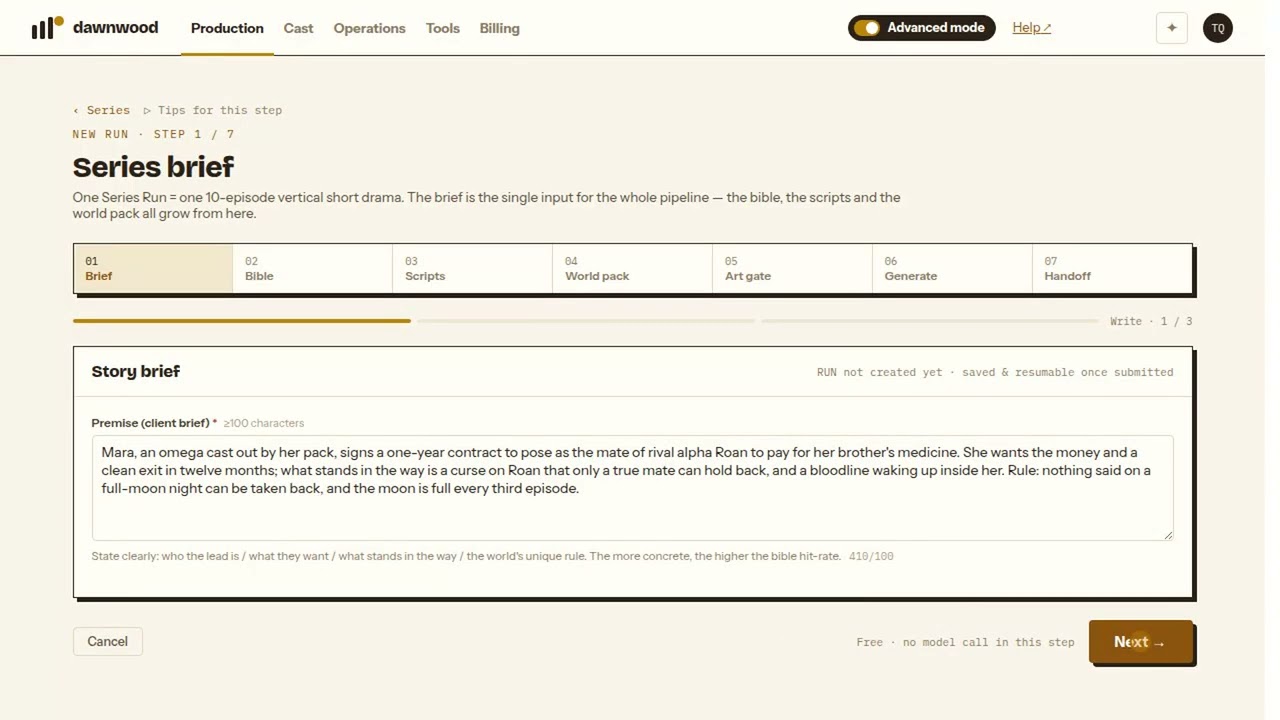
Tick "mafia" or "dark romance" in the brief and pick a formula; the season bible builds the cast web and the betrayal ladder
Dawnwood's Auto mode turns a story told in a few lines into a vertical series. It writes the characters, the 10-episode outline and the scripts without spending credits, then films one episode at a time: you read the script and say go. Credits only go on art and filming, and each episode shows its cost before it starts.
Tell us your storyHow Auto mode works →