In shortConsistency is a production decision made once, not a correction applied later. Fix the face, the voice, the era and the wardrobe in the bible before the first render; give every character reference views and one voice; and write appearance notes that describe only what does not change. Everything you leave vague gets re-invented per shot, and re-invention is what the audience reads as a different person.
Why continuity breaks
A viewer forgives a wobbly line reading. They do not forgive a lead whose face changes between episode 3 and episode 4 — that reads as a different actor, and the story stops being about a person. In a serialised format the audience meets the same face dozens of times, so any drift is compared against every previous appearance.
Drift comes from one source: anything not fixed gets decided again. Each time a shot is drawn, whatever the record does not pin down is filled in freshly. Fix it once and the problem disappears.
The four things to fix before the first render
- The face. One original face per character, generated once and kept. Not a description ("late thirties, striking") that will be re-imagined per episode, and never a real person's likeness.
- The voice. One voice per character, reused for every episode and every language version. A recast voice is heard as a recast role.
- The era and the year. State the year in the bible. An unstated year is filled in as the present, and a period drama comes back in modern clothes — the single most expensive continuity mistake, because every affected shot has to be re-rendered.
- The wardrobe rule. Not every outfit — the rule: what this character always wears, what she never wears, and the one item that is hers. A lead with a fixed silhouette survives a hundred shots.
Appearance notes: describe only what does not change
The instinct is to write more. The discipline is to write only the invariants.
| Write this | Not this |
|---|---|
| A hooked scar through the left eyebrow | "beautiful in a sad way" |
| Always gloved, both hands, indoors and out | "elegant" |
| Hair to the jaw, blunt, never tied back | "different hairstyles as the story develops" |
| A signet ring worn turned inward | "expensive jewellery" |
Mood, beauty and "energy" are not drawable and will be interpreted differently every time. Physical facts that persist across the season are what hold a character together. The help article on appearance notes has the field-by-field version.
Reference views are the contract
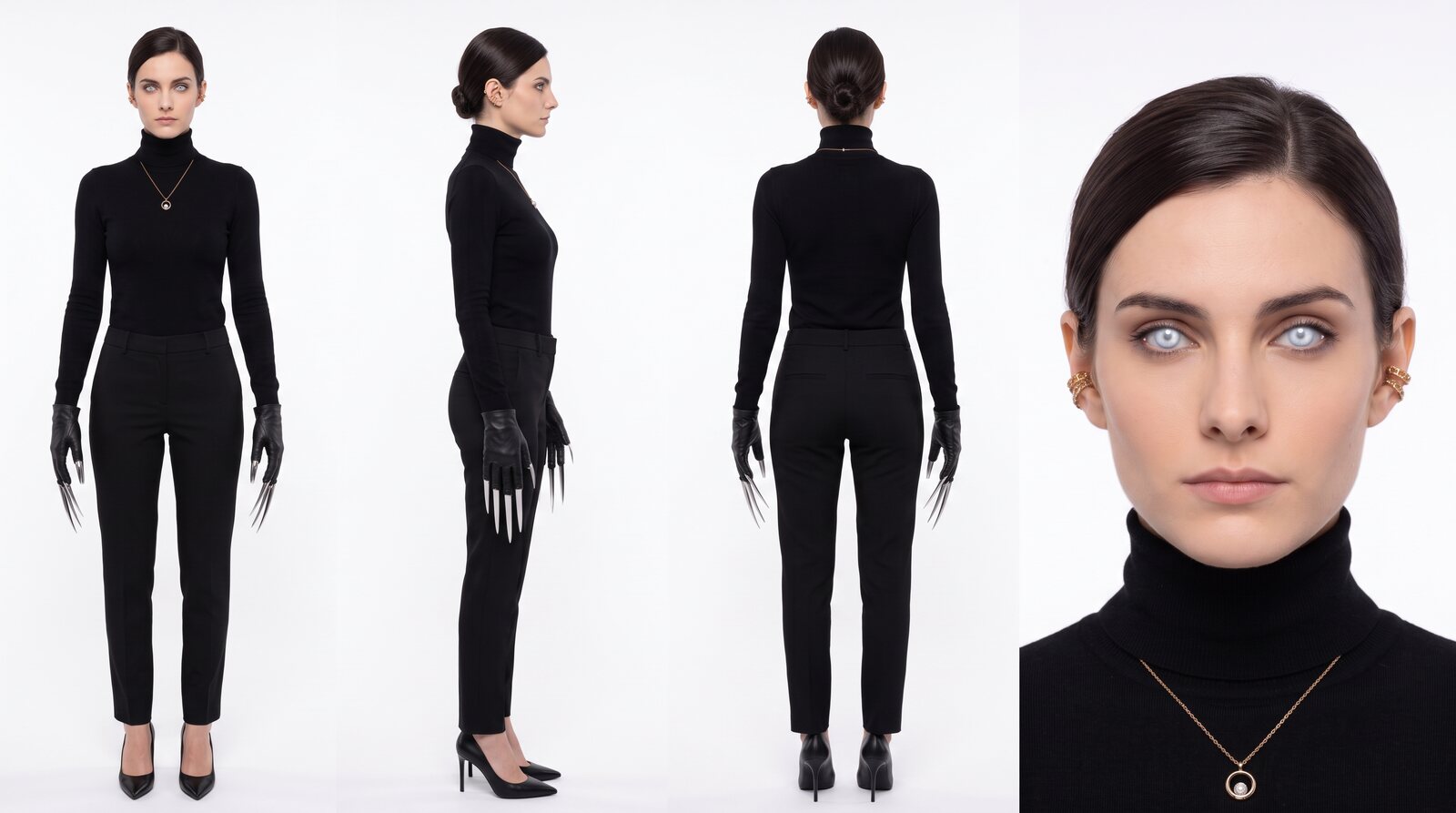
A character sheet — the same face from several angles, with the fixed wardrobe — is the thing every later shot is checked against. Once it exists, "does this look like her?" has an answer that is not a matter of opinion. Two rules:
- Approve the sheet before the season starts. Changing a face in episode 20 means re-rendering everything before it, or living with two people.
- One sheet per look, not per episode. If a character has a second look — five years older, a new identity, the wolf form — it is a second sheet attached to the same actor, not a new character. Dawnwood's character turnarounds work this way, and the help article on actors and voices covers how several looks hang off one actor.
Scenes drift too

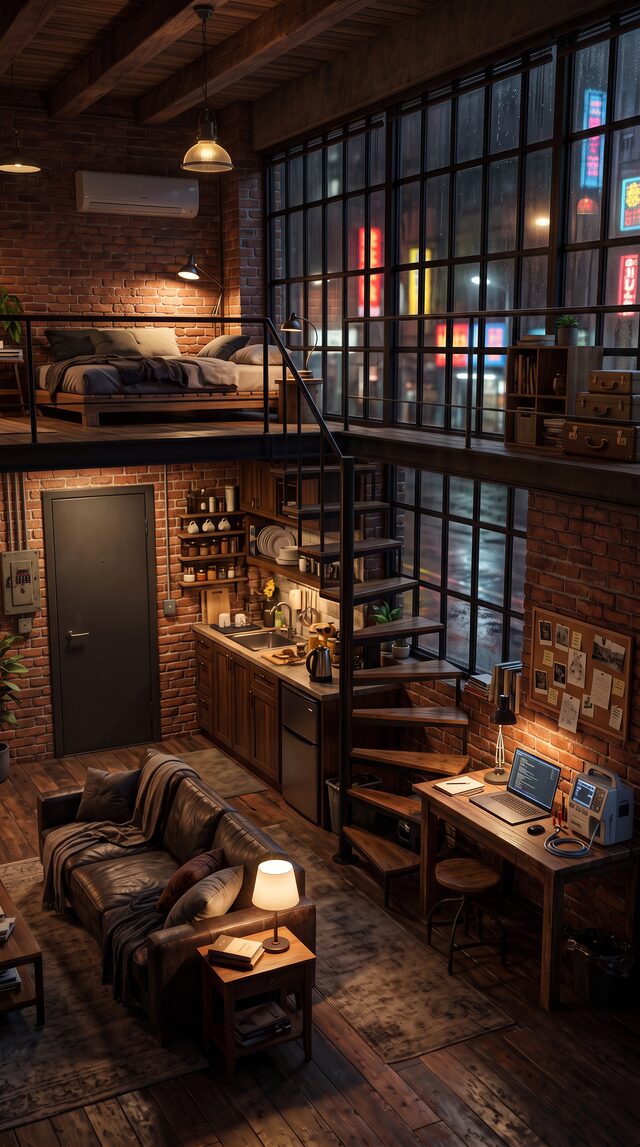
Character consistency fails in a room that keeps changing. Treat locations the same way: one scene sheet per location, covered from several angles, reused by every shot set there. If the office has a glass wall in episode 2, it has a glass wall in episode 40 — and if a scene needs a space the sheet does not contain, build the space rather than writing around it. See consistent scenes.
Props are part of the person
The tell from the character card — the ring, the gloves, the burned key — has to be attached to the character record, not mentioned in a stage direction. A prop that exists only in one script line will appear in one shot and vanish from the next, and tells only work by repetition.
When something is already wrong
- One shot is off. Re-render that shot against the sheet; do not re-render the group.
- A character is wrong from the start. Fix the sheet, then re-render forward. Everything already signed off keeps the old look; decide deliberately whether to reissue it.
- The wrong era. Fix the year in the bible first. Anything else is treating a symptom.
The help centre's fixing a shot covers the mechanics on Dawnwood, including what each fix costs before you confirm it.
Checklist
- Face, voice, year and wardrobe rule fixed in the bible before episode one renders.
- Appearance notes contain only invariants.
- Reference views approved for every character with lines.
- Second looks attached to the same actor, never to a new one.
- Locations have sheets; props that carry meaning are on the character record.
Lock the cast once and render fifty episodes against the same sheets
On Dawnwood the writing is free: type a premise, get a season bible and every episode script, revise them as much as you like. Credits are only spent when you generate art or render video, and every charge is shown before you confirm.
Start a series freeHow a series gets made →