Dawnwood / Use cases / The Bride Price case study
CASE STUDY · MADE IN DAWNWOOD

The Bride Price: ten episodes, one run.

A 10-episode Appalachian folk-horror vertical drama, made end to end in Dawnwood by our own team: bible, scripts, cast, shots, cut, captions. The automated run started on 30 August 2026; all ten episodes were signed off between 1 and 4 September. Here is what that looked like, including what went wrong.

episodes 1–5 free to watch · streaming since 2026-09-15
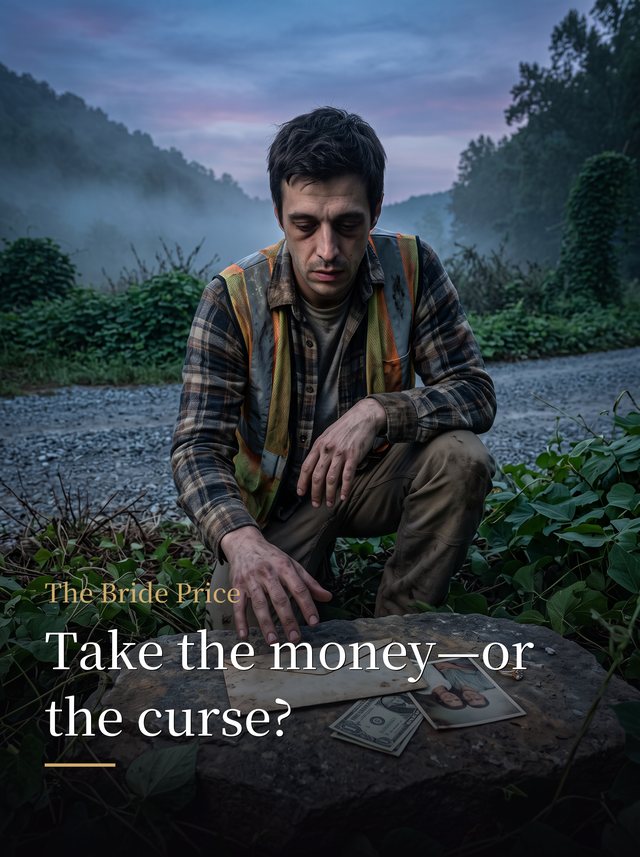
The Bride Price — poster
THE BRIDE PRICE · 10 EPISODES · 9:16 · EN · PG-13
AT A GLANCE 10 episodes 4 days to sign off all ten ≈2.07× rendered ÷ finished seconds ≈17 min finished runtime
THE SERIES

What we made.

What is The Bride Price? After accepting the exact $1,800 he needs from a mountain crossroads, a debt-ridden skeptic discovers that the patient dead bride who paid his price is using luck, domestic devotion and his own body to prepare him for their wedding. A self-contained 10-episode short series in English, 9:16, PG-13 supernatural horror: quiet dread, no gore.

It was the first series made fully inside Dawnwood, on the same product customers use: the bible was co-written in the console, the scripts, cast sheets, sets and shot plans came out of the pipeline, and every episode went through the same quality check and sign-off. It is not on any third-party platform or social channel; it streams on our own site, duskwire.ai.

TIMELINE

Four days from first render to sign-off.

2026-08-30
All ten episodes launched as one automated production run: storyboard, set and cast art, renders, stitching and episode masters.
2026-08-31
First full cut of all ten episodes measured. At this point about 2.07 seconds had been rendered for every second in the cut, and the cut ran about 17 minutes across ten episodes.
2026-09-01 → 09-04
Hand-directed fixes through the fixing agent, episode by episode, and sign-off on all ten. Sign-off is a person watching and approving; passing machine QC is not enough.
2026-09-15
Released on duskwire.ai, first five episodes free.
BY THE NUMBERS

What the run actually took.

MEASUREVALUEWHAT IT MEANS
shot groups per episode7 – 11The unit that gets rendered, checked and, if needed, re-rendered. A bad shot costs one group, not an episode.
candidate takes per episode15 – 45Every take is screened by QC before it can be picked; the best clean one wins.
explicit re-renders per episode2 – 16Re-renders ordered by a person, on top of the automated pass. The spread is real: some episodes landed almost first time, some did not.
rendered ÷ finished seconds≈ 2.07Measured after the automated pass (2026-08-31); the hand fixes of 1–4 September came after and are not in this number.
episodes blocked on first pass5 of 10Launching all ten at once ran into render concurrency limits. They resumed, but it cost time.
fix conversations10 threads · ≈80 roundsNotes given to the fixing agent across the series, roughly one thread per episode.

One series, made by the team that builds the product. Treat these as a data point, not a benchmark or a promise. For scale: our credits calibration puts a script of this size at roughly 420 credits from signup to its first finished segment, inside the 500 one-time signup credits.

WHAT WENT WRONG

The notes, sorted.

About 80 rounds of notes fell mostly into five kinds of problem. We counted them because they tell you what AI video still gets wrong in a drama, and what a studio tool has to catch:

PROBLEMROUGH COUNTEXAMPLE
scene drift≈15A scene written indoors rendered outdoors; the wrong room.
wrong prop≈15The bride's black-and-white photograph, a ring, an envelope: the object had to be the established one.
character missing or swapped≈6The character the scene is about doesn't appear on screen.
physics≈6A floating cup; a match standing on a candle; a reflection that doesn't follow the hand.
blocking, emotion, pacing≈8Running too slowly and staying too calm; a reaction that comes before the sound that causes it.

What changed in the product because of it. These five categories became the problem chips in the fix box, so a note names the kind of problem and the shot it's on instead of relying on free text. Six of the notes were some version of "that looks exactly like the old one", which is why there is now a help page on re-renders that look unchanged. The fix box now offers three scopes: a local edit, one shot, or the whole group.

WHAT THIS DOES AND DOESN'T SHOW

Read it for what it is.

IT SHOWS…
A whole series can go through one pipeline
Ten episodes with a consistent cast and world went from one run to signed-off masters in days, with fixes made at the shot group rather than by re-rolling episodes.
IT DOESN'T SHOW…
That it works without a director
About 80 rounds of notes went into it, from someone who knew what each scene should be. Dawnwood doesn't replace that judgment; the point is that each note fixes one thing without breaking the rest.
KEEP GOING

More on how it works.

WATCH, THEN MAKE

Judge the result yourself.

The first five episodes are free on duskwire.ai. Then try your own premise: 500 credits once on signup, enough to write the bible, build the cast and render a first segment.